
Get your water safety skills on! This American Red Cross certification course will prepare you to respond to aquatic emergencies in swimming pools and open water (non-surf, non-whitewater). Certification & Recertification tracks are available.
American Red Cross Lifeguarding and Waterfront Skills
The purpose of the American Red Cross Lifeguarding course is to provide participants with the knowledge and skills needed to:
Prevent, recognize and respond to aquatic emergencies in both shallow water (less than 7 feet) and deeper water (7 feet or more)
Provide professional-level care for breathing and cardiac emergencies, injuries and sudden illnesses until emergency medical services (EMS) professionals take over.
To enroll in the Lifeguarding course, you must be at least 15 years old before the last scheduled class session.
To participate, you must be able to pass a prerequisite swimming skills evaluation, which includes two parts and takes place during the first in-person session.
This course follows a blended learning model, which combines online coursework with in-person sessions.
Lifeguarding Prerequisites
Jump in, submerge, resurface and swim 150 yards continuously, tread water for 2 minutes, and then swim 50 more yards. While swimming, you must keep your face in the water and demonstrate good breath control. You may swim using the front crawl, breaststroke or a combination of both. Swimming on the back or side is not permitted. Swim goggles are allowed. When treading, you must use only your legs.
Complete a timed event within 1 minute, 40 seconds. Starting in the water, swim 20 yards. Your face may be in or out of the water. Swim goggles are not allowed. Surface dive (head-first or feet-first) to a depth of 7 to 10 feet to retrieve a 10-pound object. Return to the surface and swim 20 yards on your back to return to the starting point, holding the object at the surface with both hands and keeping your face at or near the surface. Swimming the distance underwater is not permitted. Exit the water without using a ladder or the steps.
Waterfront Skills Prerequisites
Jump in, submerge, resurface, swim 350 yards using front, breast or a combination stroke. Maintain position at the surface for 2 minutes by treading water arms only. Swim 200 yards using front, breast or a combination stroke.
Starting in the water, swim 20 yards, no goggles. Submerge to 7-10 feet and retrieve a 10 pound object. Return to the surface, swim 20 yards on your back holding the object at the surface with both hands and keeping face out of the water. Exit water without using ladder or the steps.
Swim 5 yards, submerge and retrieve 3 dive rings placed 5 yards apart in 4-7 feet of water. Resurface and continue to swim another 5 yards.
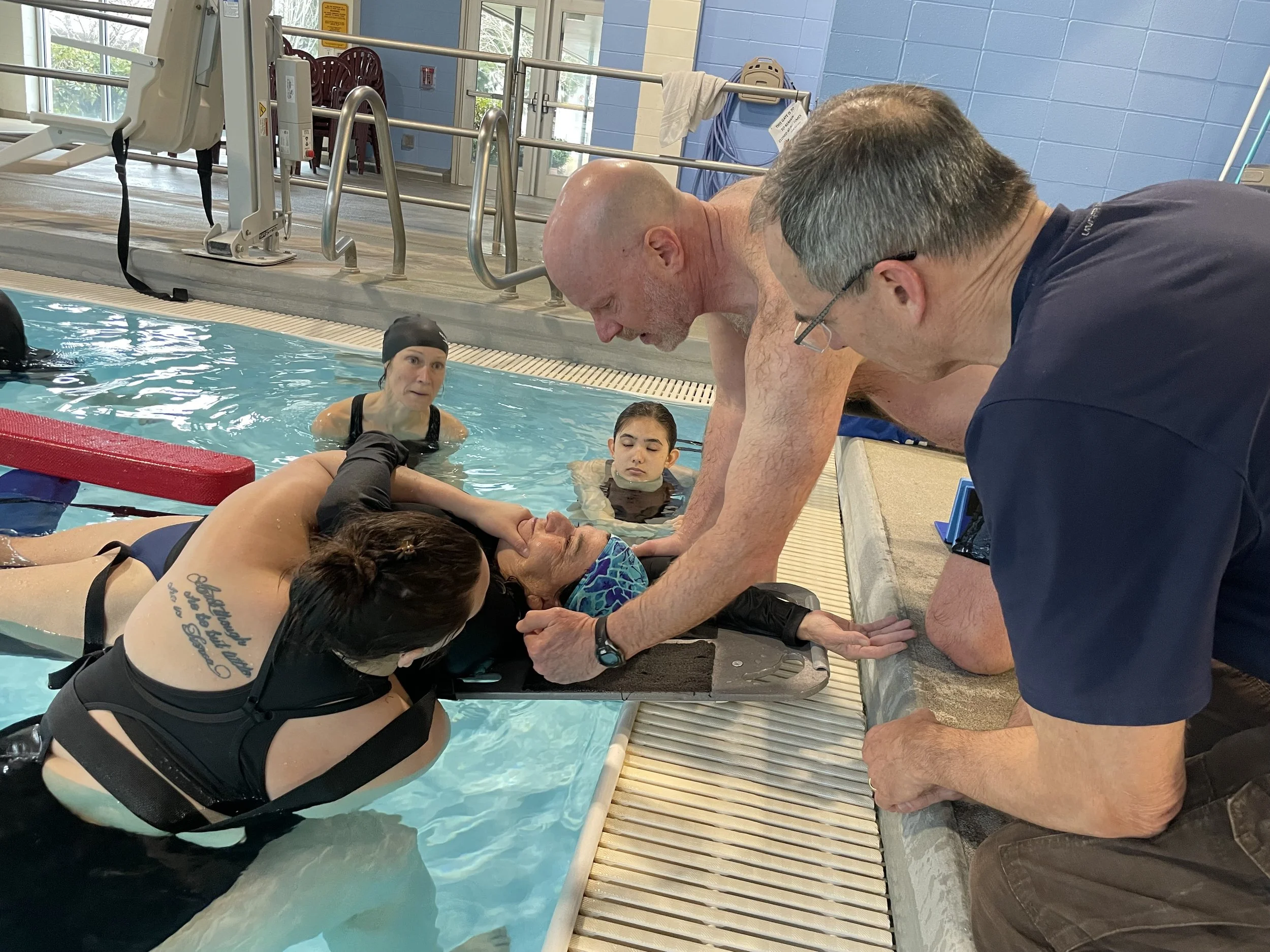
In the US, drowning is the second leading cause of death for children ages 5-15, and the first leading cause of death for children ages 1-4. In Oregon, drowning rates are nearly twice the national average and almost all drownings occur in natural bodies of water. Gain national level certification in essential skills to be able to provide life saving assistance to someone in the water.
The Red Cross LIFEGUARDING course provides participants the knowledge and skills to prevent recognize and respond to aquatic emergencies in both shallow water (less than 7 feet) and deeper water (7 feet or more) and to provide professional-level care for breathing and cardiac emergencies injuries and sudden illnesses until EMS personnel take over.
The Red Cross WATERFRONT SKILLS module, integrated into the Lifeguarding course, equips lifeguards with the knowledge and skills to prevent and respond to emergencies in non-surf, open-water areas like parks, resorts, and camps.
Key Skills and Knowledge:
Water Rescue Techniques: Lifeguards learn how to enter the water for rescues, including run-and-swim entries, and techniques for assisting individuals in distress.
Search and Retrieval:Learn search patterns and techniques for locating missing persons in open water, potentially using equipment like nets or masks and fins.
Equipment: Learn to use equipment specific to waterfront environments, such as rescue tubes, surfboards, or paddleboards, depending on the environment.
First Aid and CPR: The course reinforces first aid and CPR/AED skills, essential for responding to emergencies in and out of the water.
Water Safety: Learn about the specific hazards of open-water environments, such as currents, depths, and aquatic life, and how to mitigate these risks.
Environmental Awareness: Gain knowledge about the specific waterfront environment where they are lifeguarding, including potential hazards and safety protocols.
Course Structure:
This class is taught in a blended learning format and the assigned online portion(s) must be completed prior to the instructor-led session.
The in-person portion is delivered over two weekday evenings (Thursday / Friday) and two full weekend days (Saturday / Sunday).
The final skills assessment includes timed response scenarios, surveillance rotations, and multiple-rescuer response scenarios.
Run of the program:
Location: 6651 SW Capitol Highway, Portland OR 97219
Saturday 10/24: 8a - 5p
Sunday 10/25: 9a - 6p
Saturday 10/31: 8a - 5p
Sunday 11/1: 9a - 6p
Prerequisites:
Open to anyone 15 years and up
For Lifeguarding
Must be able to complete a swim- tread-swim sequence: Jump into the water submerge resurface swim 150 yards (using the front crawl breaststroke or a combination of both) maintain position at the surface of the water for 2 minutes by treading water using only the legs then swim 50 yards using the front crawl breaststroke or a combination of both.
Must be able to complete a timed event within 1 minute 40 seconds by starting in the water swimming 20 yards surface dive (feet-first or head-first) to a depth of 7 to 12 feet to retrieve a 10-pound object return to the surface and swim 20 yards on the back to return to the starting point holding the object at the surface with both hand exit the water without using a ladder or steps.
For Waterfront Skills
Swim, Tread, Swim : Must be able to jump into the water, totally submerge, recover to the surface and swim 350 yards, then tread water using only legs or float for 2 minutes, and then swim 200 more yards.
Timed event: Within 1 minute, 40 seconds, must be able to swim 20 yards, surface dive to 7-10 feet, retrieve a 10-pound brick, and return to the starting point holding the brick at the surface.
Underwater swim: Must swim 5 yards, submerge, swim underwater and retrieve 3 dive rings with one breath, and continue to swim another 5 yards.
Certification: Participants who successfully complete this course receive an American Red Cross certificate for Lifeguarding (including deep water and non surf open water environments) with CPR/AED for Professional Rescuers and First Aid valid for 2 years.
Trainers: Marlys Cappaert & Dena Marshall, WaterStrong
Equipment: Participants should wear comfortable clothing, and bring a notebook, swimwear and towels, water bottle, a light meal/snacks.
WaterStrong is 501c3 non-profit organization with the mission to end drowning and promote cleaner, safer waters, destroying barriers along the way. All proceeds from this training support WaterStrong family programs for low income and underserve families.